
The short answer
If your AC is blowing warm air, running nonstop, leaking water, or making new noises, it likely needs a professional diagnosis. FirstChoice HVAC Repair finds the root cause, explains your repair or replacement options in plain terms, and gets your approval before any work begins.
When your air conditioner stops keeping up in Miami Beach, the house can turn warm and sticky within hours. Our climate keeps cooling running for most of the year, so a struggling system is more than a small inconvenience. FirstChoice HVAC Repair diagnoses and repairs central air conditioners and heat pumps for homeowners in Miami Beach and nearby cities. This page covers the warning signs worth acting on, what our technicians check during a visit, how we help you weigh repair against replacement, what shapes the cost of a repair, and how a service visit works, so you know what to expect before anyone arrives.
Signs Your Air Conditioner Needs Repair
Most AC problems give some warning before a full breakdown, and catching them early often means a simpler fix. Call for service if you notice any of the following:
During the wet season, from May through October, humidity is often the first thing homeowners notice. An AC that cools the air but leaves the house feeling damp may have an airflow, coil, or drainage problem that is worth checking before it gets worse.
- Warm or barely cool air from the vents, even with the thermostat set low
- The system runs constantly but the house never reaches the set temperature
- Rooms that feel clammy or damp even when the air is cool
- Water pooling near the indoor unit, or a ceiling stain below an attic air handler
- Ice on the refrigerant lines or the indoor coil
- Short cycling, where the system turns on and off every few minutes
- New noises such as grinding, squealing, buzzing, or banging
- Musty, burning, or electrical smells coming from the vents
- A breaker that trips when the AC starts
- A jump in your electric bill without a change in how you use the system
What We Check During an AC Repair Visit
A good repair starts with a full diagnosis, not a guess. Our technician looks at the whole system so we fix the cause of the problem instead of just the symptom you noticed first.
Salt air near the coast can speed up corrosion on outdoor coils, fins, and electrical connections, so we pay close attention to those parts on Miami Beach homes. After heavy storms, we also look for debris, standing water, or physical damage around the outdoor unit.
- Thermostat settings, wiring, and power
- Air filter condition and return airflow
- Capacitors, contactors, and electrical connections at the outdoor unit
- Compressor and condenser fan motor operation
- Refrigerant pressures and signs of a leak
- Evaporator and condenser coils for dirt, corrosion, or ice
- Condensate drain line, drain pan, and safety float switch
- Blower motor and indoor fan operation
- Visible ductwork for disconnected or leaking sections
Repair or Replace: Making the Right Call
Many AC problems are straightforward repairs. A failed capacitor, a clogged condensate line, a worn fan motor, or a refrigerant leak that can be located and sealed usually makes repair the sensible choice. Replacement is worth considering in some situations:
We explain the trade-offs plainly and leave the decision to you. If you do replace, Florida Power & Light runs a Residential HVAC program that offers rebates on qualifying high-efficiency central air conditioners and heat pumps, delivered through participating contractors at the time of installation. We confirm the current program terms before including them in any quote. Keep in mind that the federal Energy Efficient Home Improvement Credit (25C) only covered qualifying heat pumps placed in service before December 31, 2025, so it is not available for new installations today.
- The system is older and needs a major component such as a compressor or indoor coil
- Repairs have become frequent and keep adding up
- The unit uses an outdated refrigerant that is harder to service
- Your home has comfort or humidity problems the current system has never handled well
- Energy bills keep climbing even after repairs
What Affects the Cost of an AC Repair
We can't give an accurate price without seeing your system, but a handful of factors account for most of the difference from one repair to the next:
Before any work begins, your technician will explain what they found and what the repair involves. You can approve it, ask questions, or take time to think it over.
- Which part failed and how easy it is to get
- Whether refrigerant is needed, and which type your system uses
- How long it takes to find the problem, especially with intermittent faults or slow leaks
- Access to the equipment, such as tight attics, closets, or rooftop units
- The age and brand of the system, which affect part sourcing
- Whether you need service outside normal hours
How an AC Repair Visit Works
When you contact us, tell us what you're noticing, when it started, and any codes or messages on your thermostat. That helps the technician arrive prepared. Before you call, a few quick checks can save time: make sure the thermostat is set to cool, replace a dirty filter, and confirm the breaker hasn't tripped. If you see ice on the lines or coil, turn the system off and let it thaw.
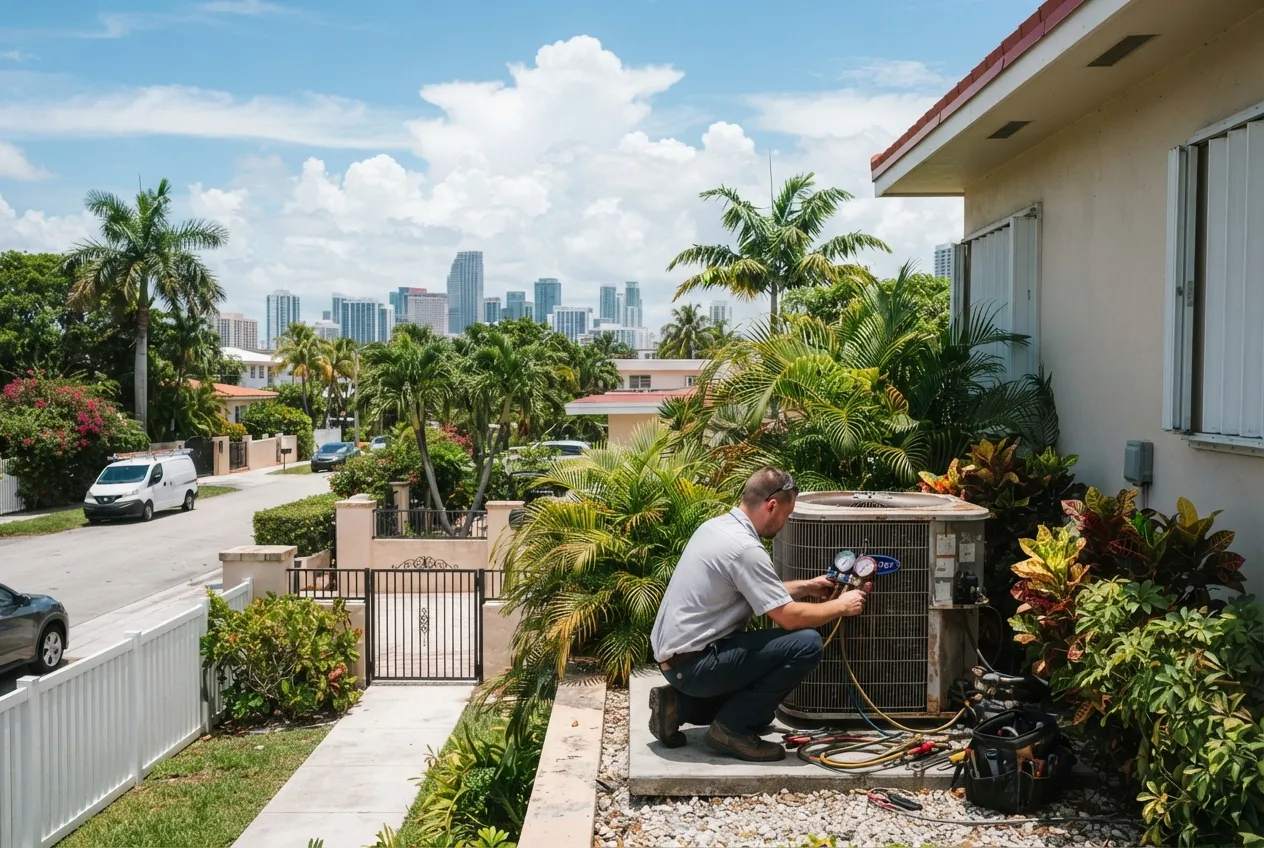
At your home, the technician inspects the system, runs tests, and pinpoints the cause. They then walk you through the findings and your options in plain language. Once you approve, they complete the repair, test the system to confirm it is cooling and draining properly, and show you what was done.
Hurricane season runs from June 1 to November 30. After a storm or power outage, don't restart an outdoor unit that has been underwater or visibly damaged. Have it inspected first, since water and debris can harm electrical parts and the compressor.
AC Repair by city
- AC Repair in North Bay Village
- AC Repair in Surfside
- AC Repair in Bay Harbor Islands
- AC Repair in Miami
- AC Repair in North Miami
- AC Repair in North Miami Beach
- AC Repair in Sunny Isles Beach
- AC Repair in Opa-locka
- AC Repair in Miami Springs
- AC Repair in Aventura
- AC Repair in Golden Beach
- AC Repair in West Miami