
The short answer
HVAC maintenance is a scheduled inspection, cleaning, and adjustment of your cooling and heating system. In Miami Beach, where AC runs most of the year, it helps control humidity, catches small problems before they become breakdowns, and keeps your system ready for hurricane season.
In Miami Beach, your air conditioner runs for most of the year. The wet season from May through October brings heavy humidity and frequent afternoon thunderstorms, and even the sunnier, drier months from November through April rarely give a system a real break. Regular maintenance keeps this hard-working equipment cooling evenly, controlling moisture, and running efficiently. FirstChoice HVAC Repair offers maintenance visits for homeowners in Miami Beach and nearby cities. Below, we explain the signs that a tune-up is overdue, what our technicians check, how we help you weigh repair against replacement, what affects the cost, and what a visit looks like from start to finish.
Signs Your System Needs Maintenance
Many HVAC problems build slowly, so it is easy to get used to a system that is no longer performing well. If you notice any of the following, schedule a visit rather than waiting for a breakdown during the hottest part of the year.
- Rooms feel warm or sticky even though the thermostat is set low
- The system runs much longer than it used to, or cycles on and off often
- Water pools near the indoor unit, or the drain line backs up
- A musty smell when the system starts, which can point to moisture in the coil or ducts
- New noises such as rattling, buzzing, squealing, or grinding
- Electric bills creep up without a change in how you use your home
- Ice forms on the refrigerant lines or the indoor coil
- It has been more than a year since anyone looked at the system
What We Check During a Maintenance Visit
A maintenance visit is more than a quick filter swap. Our technician works through the indoor and outdoor equipment to find wear, dirt, and small faults before they turn into a no-cooling call. In a salty, humid coastal setting, we pay extra attention to corrosion and drainage.
When we finish, you get a plain explanation of what we found, what we cleaned or adjusted, and anything that needs attention now or should be watched.
- Air filter condition and fit, with replacement if needed
- Evaporator coil and condenser coil cleanliness
- Condensate drain line, pan, and safety float switch, cleared and tested
- Refrigerant pressures and the temperature split across the coil
- Electrical connections, capacitors, and contactors for wear or heat damage
- Blower motor and fan blades
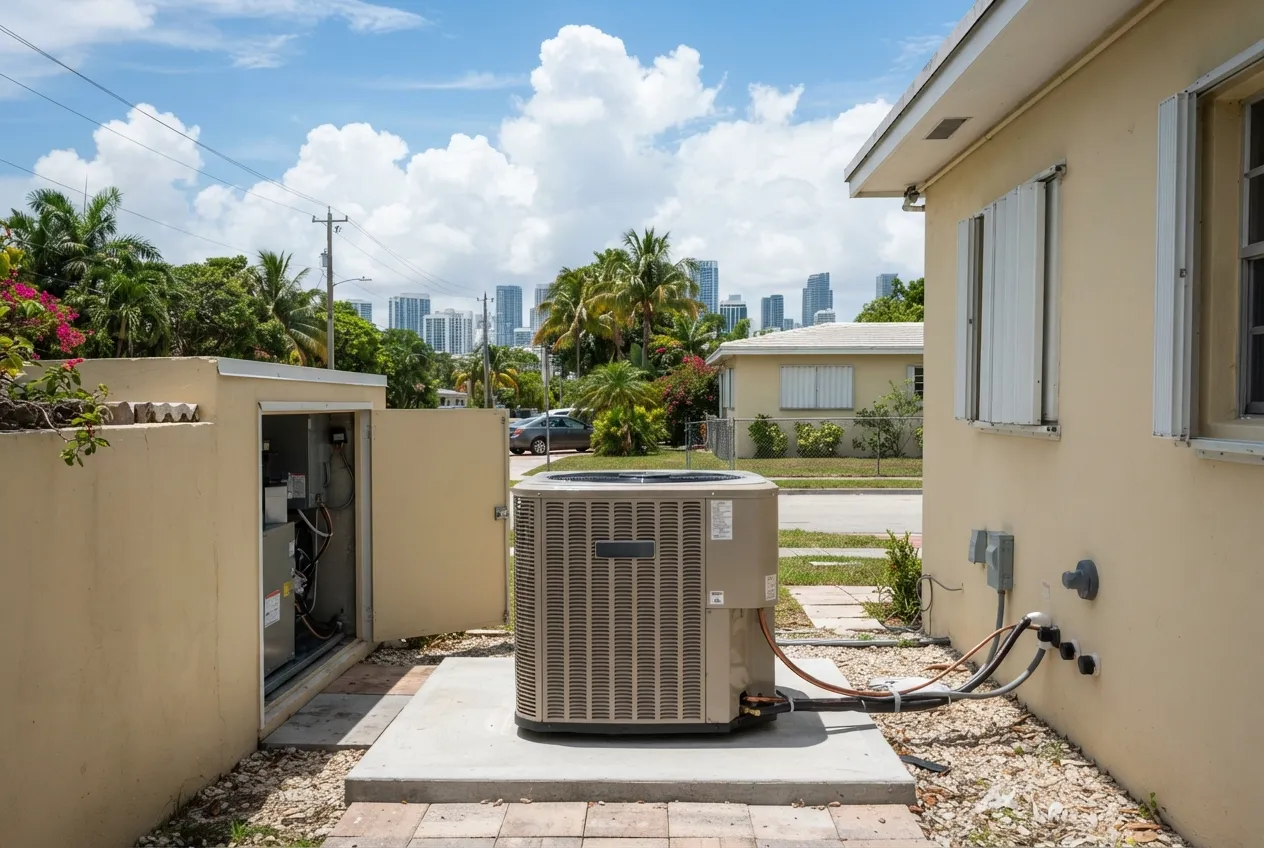
- Outdoor unit for corrosion, debris, and clearance from plants or stored items
- Thermostat settings and calibration
- Visible ductwork and connections for leaks or loose sections
- Heating mode and reversing valve, if you have a heat pump
Repair or Replace: Making the Call
Sometimes a maintenance visit turns up a part that is failing. Many issues, like a weak capacitor, a clogged drain, or a worn contactor, are straightforward repairs that restore normal operation. Others raise a bigger question about whether the system is worth continuing to fix.
We walk you through the factors that matter: the age and overall condition of the equipment, how often it has needed repairs, whether it uses an older refrigerant that is harder to service, how well it keeps your home cool and dry, and how much energy it uses compared with newer equipment. We give you our honest assessment and let you decide.
If replacement makes sense, Florida Power & Light runs a Residential HVAC program with rebates on qualifying high-efficiency central air conditioners and heat pumps, provided through participating contractors at the time of installation. We confirm the current program terms before including them in any quote. The federal Energy Efficient Home Improvement Credit for heat pumps only applied to systems placed in service before December 31, 2025, so it is not available for new installations.
What Affects the Cost of Maintenance
We do not quote maintenance until we know what your home has, because several factors change the time and materials involved.
- The number of systems or zones in your home
- System type, such as a split system, heat pump, or packaged unit
- How long it has been since the last service and how dirty the coils and drain are
- Equipment location and access, including attics, closets, and condo rooftops
- Filter size and type
- Whether a deeper coil cleaning or drain treatment is needed beyond a standard visit
- Any repairs or parts found during the inspection, which we explain before doing the work
How a Maintenance Visit Works
Here is what to expect when you book a maintenance visit with FirstChoice HVAC Repair.
Most homeowners go about their day while we work. Please make sure the indoor unit, outdoor unit, and thermostat are easy to reach.
- You contact us and we schedule a time that works for you
- The technician asks about any comfort issues, noises, or leaks you have noticed
- We inspect, clean, and test the indoor and outdoor equipment
- We review findings with you in plain language and show you any problem areas
- If repairs are needed, we explain your options before any additional work begins
- We note recommendations for the next visit so nothing gets overlooked
Timing Maintenance Around Miami Beach Weather
Because air conditioning runs most of the year here, many homeowners schedule maintenance at least once a year, and some prefer twice. Spring, before the wet season starts in May, is a practical time to make sure the system is ready for heavy humidity and long run times.
The Atlantic hurricane season runs from June 1 to November 30. Before and during that stretch, it helps to confirm that the outdoor unit is clear of loose debris, the drain line is flowing, and electrical components are in good shape. After a storm, if your outdoor unit was exposed to flooding or heavy debris, have it inspected before running it again.