
The short answer
If your home smells musty, feels clammy, or gets dusty fast, your HVAC system may be spreading moisture and contaminants instead of removing them. We inspect your filter, coil, drain, ducts, and humidity control, then lay out repair, upgrade, and replacement options so you can choose what fits your home.
In Miami Beach, the windows stay closed and the air conditioner runs most of the year. The same indoor air gets pulled through your system and blown back into your rooms again and again. Over time, moisture, dust, pet dander, and mold spores can collect in the air handler and ductwork, and that is the air your family breathes every day. FirstChoice HVAC Repair inspects the parts of your heating and cooling system that affect indoor air, explains what we find in plain language, and helps you decide what is worth fixing. We work with homeowners in Miami Beach and nearby cities, in houses, townhomes, and condos.
Signs Your Home Needs an Indoor Air Quality Check
Air quality problems usually build slowly, so they are easy to get used to. Watch for these common warning signs:
Humidity is the biggest factor in South Florida. During the wet season, from May through October, frequent afternoon thunderstorms keep outdoor air heavy with moisture, and your air conditioner has to pull that moisture out of the house as well as cool it. If the system is the wrong size, shuts off too quickly, or has a slow drain, moisture can stay inside and feed mold and mildew.
- A musty or sour smell when the AC turns on
- Dust that settles back on furniture a day or two after cleaning
- Dark spots or visible growth on supply vents, ceiling grilles, or the air handler cabinet
- Rooms that feel sticky or clammy even when the thermostat is set low
- Allergy or sinus symptoms that ease when you leave the house
- Condensation dripping from vents or ductwork
- Standing water in or around the drain pan
- A filter that clogs well before its scheduled change
What We Check During an Indoor Air Quality Visit
An indoor air quality visit focuses on the parts of your system that touch the air before it reaches your rooms. We look at how they work together, not just at one component.
If we find something outside the HVAC system, such as water damage in a wall or a plumbing leak, we will point it out so you can bring in the right trade.
- Air filter type, size, and whether it fits snugly or lets air bypass it
- Evaporator coil for dirt buildup and growth
- Drain pan and condensate line for clogs, slow drainage, or rust
- Blower wheel and cabinet interior for dust and debris
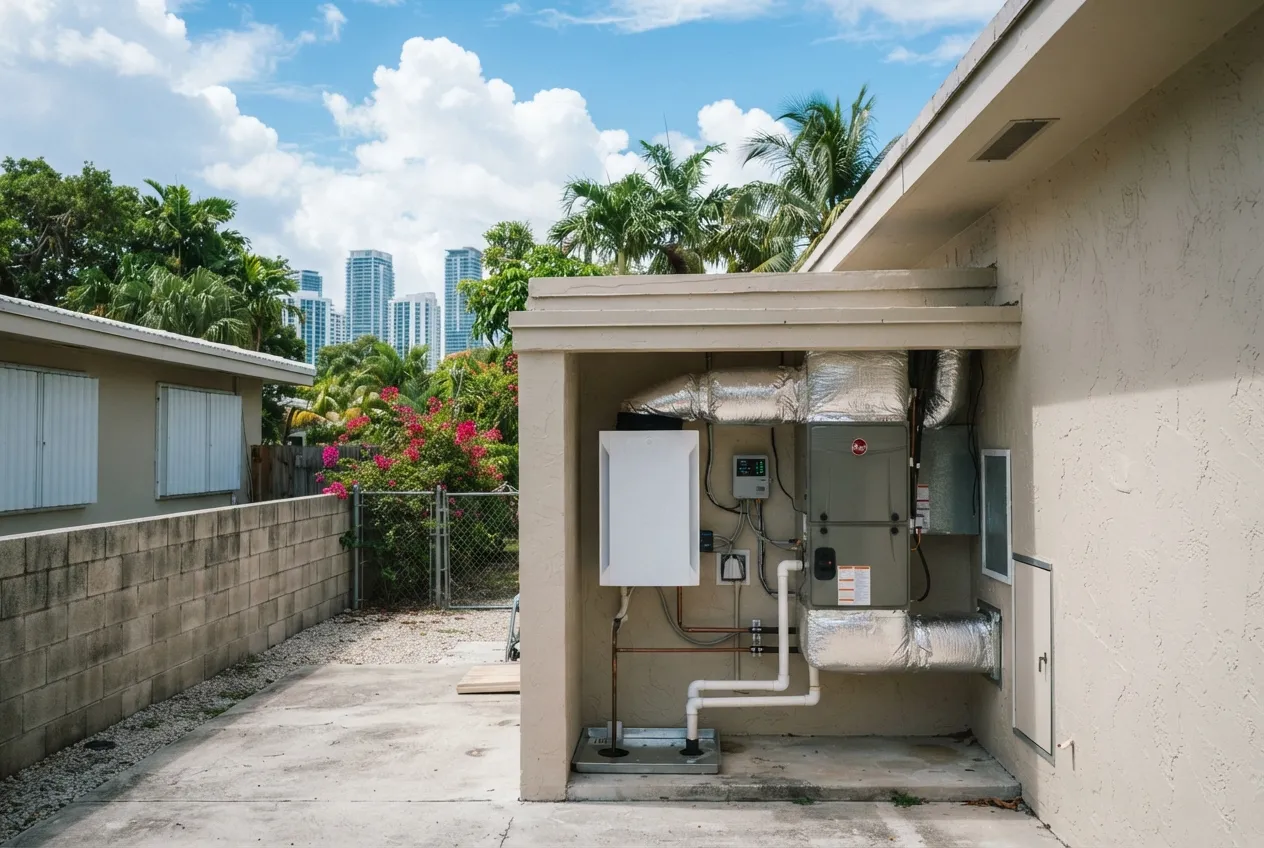
- Ductwork for leaks, disconnected sections, damaged insulation, and sweating
- Return air grilles and pathways, including whether rooms are starved for return air
- Indoor humidity and how long your system runs each cycle
- Airflow and system operation, since poor airflow reduces moisture removal
- Any existing air cleaners, UV lights, or dehumidifiers to confirm they are working
Repair, Upgrade, or Replace: Your Options
Many air quality problems can be fixed without new equipment. Cleaning a dirty coil, clearing a clogged drain line, sealing leaky duct joints, fixing a filter rack that lets air slip past, or correcting airflow can make a noticeable difference in how your home smells and feels.
If repairs alone will not solve the problem, we can talk through add-on equipment. Options include a whole-home dehumidifier for persistent humidity, a higher-capacity media filter cabinet, UV lights installed near the coil, or controlled fresh-air ventilation for tightly sealed homes. We will explain what each one does and whether it addresses the issue we found, so you do not pay for equipment you do not need.
Replacement makes sense when ductwork is badly deteriorated or contaminated beyond cleaning, or when the air conditioner is aging, oversized, and keeps needing repairs. If you replace your central air conditioner or heat pump with a qualifying high-efficiency model, Florida Power & Light's Residential HVAC program may offer a rebate through participating contractors at the time of installation. We confirm the current terms before quoting them. Note that the federal Energy Efficient Home Improvement Credit no longer applies to heat pumps installed after December 31, 2025.
What Affects the Cost
Every home is different, so we give you a written estimate after the inspection rather than guessing over the phone. These are the main factors that shape the cost:
- The scope of the problem and how many components need attention
- Where your air handler and ducts are located, such as a closet, garage, or attic
- The size of your home and the amount of ductwork
- Whether ducts need sealing, repair, or full replacement
- The type of add-on equipment you choose, if any
- Any electrical, drain, or mounting work needed to install new equipment
- The age and condition of your current system
- Whether a replacement qualifies for a utility rebate
How a Visit Works
When you contact us, we ask what you are noticing, such as smells, humidity, dust, or health concerns, so the technician arrives prepared. At your home, the technician talks with you first, then inspects the system from the filter to the supply vents.
After the inspection, we walk you through what we found, show you photos of problem areas when possible, and give you written options. Some fixes can be handled during the same visit, while others need to be scheduled. You decide what to do, and we never start work you have not approved. Before we leave, we explain how often to change your filter and what to watch for going forward.
Keeping Your Air Healthy Between Visits
Hurricane season runs from June 1 to November 30, and storm-related power outages can leave your home without air conditioning while humidity climbs inside. After an outage, check for musty smells, damp spots, or condensation around vents, and call us if anything seems off. Changing filters on schedule, keeping supply and return vents clear of furniture, and running bathroom and kitchen exhaust fans also help keep indoor air drier and cleaner all year.