
The short answer
A ductless mini-split is a good fit when a room or addition won't stay cool, you depend on window units, or adding ductwork isn't practical. We assess the space, electrical, and placement options, explain repair or replacement choices for existing systems, and give you a written quote before any work begins.
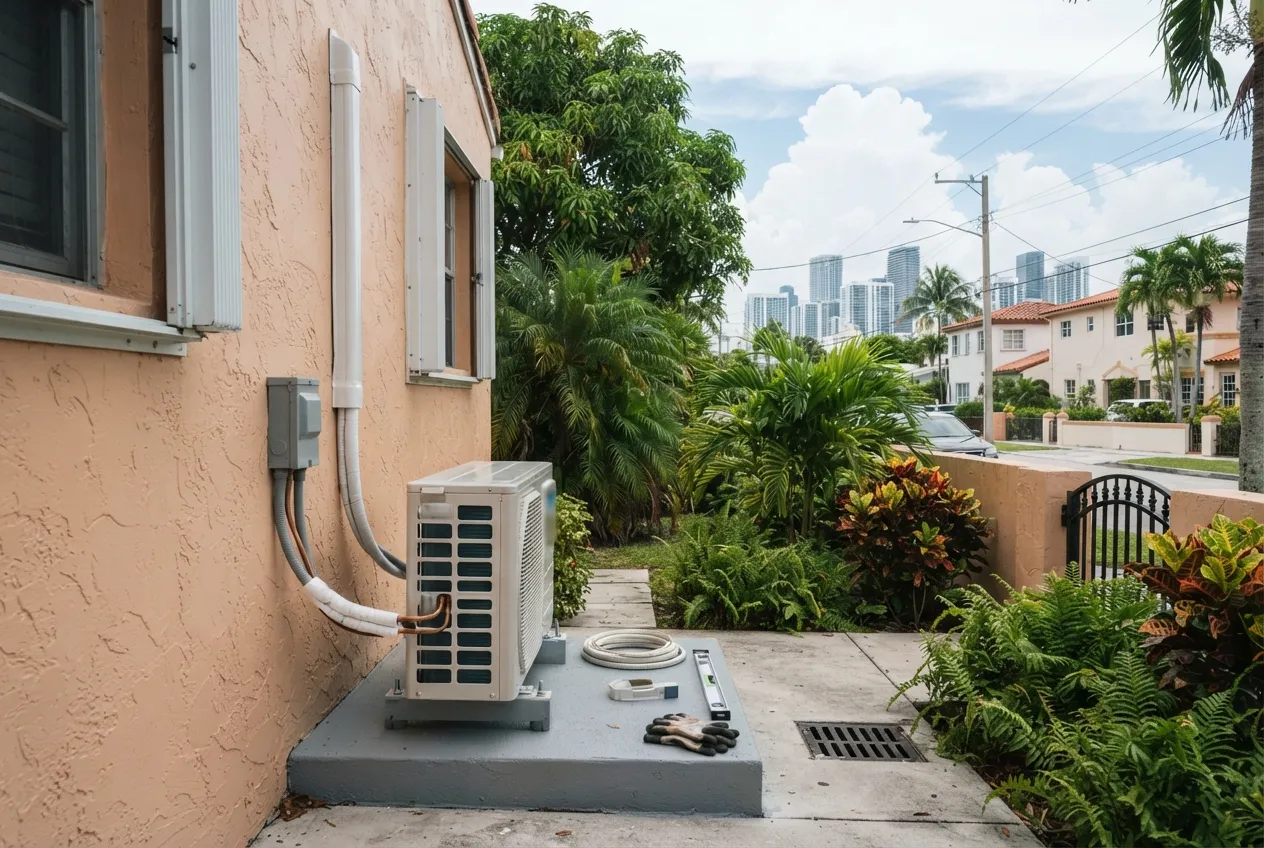
A ductless mini-split delivers cooling and heating exactly where you need it, without running ductwork through walls and ceilings. For many Miami Beach houses, condos, and additions, it is the most practical way to fix a room that never cools down, replace noisy window units, or condition a converted garage or enclosed porch. We install single-zone and multi-zone systems for homeowners in Miami Beach and nearby communities. We size and place each unit around how you actually use the space, not just the square footage on a floor plan. Below is what to look for, what we evaluate, and what to expect from the first conversation to the final test run.
Signs a Mini-Split Makes Sense for Your Home
Air conditioning runs for most of the year in Miami Beach. The wet season from May through October brings heat, heavy humidity, and frequent afternoon thunderstorms. Even the sunnier, drier months from November through April rarely give your system a long break. When part of your home can't keep up, a ductless system is often the cleanest fix. Common signs include:
- One room or floor stays warmer and stickier than the rest of the house
- You rely on window units that are loud, block the view, or drip onto the sill
- You added a room, enclosed a porch, or converted a garage that has no ductwork
- Your older home or condo has no space for ducts, or adding them would mean major demolition
- Your existing mini-split is aging, cycles on and off constantly, or no longer keeps the room dry
- You want separate temperature control for a bedroom, home office, or guest suite
What We Check Before Recommending a System
A mini-split performs well only when it is matched to the room and installed in the right spot. An oversized unit cools quickly but shuts off before it removes enough moisture, which leaves the room cold and clammy. An undersized one runs constantly and still falls behind on hot afternoons. Before we suggest equipment, we look closely at the space and the building:
If you're comparing indoor unit styles, we'll explain the tradeoffs between wall-mounted heads, ceiling cassettes, and concealed ducted air handlers. That way you can choose based on appearance, airflow, and how the room is laid out.
- Room size, ceiling height, window exposure, and how much afternoon sun the space gets
- Insulation, air leaks, and how humid the room feels during the wet season
- Where the indoor unit can mount for even airflow without blowing directly on a bed or desk
- Where the outdoor unit can sit with proper clearance, drainage, and service access
- The route for the refrigerant line set, condensate drain, and control wiring
- Electrical panel capacity and whether a new dedicated circuit is needed
- Condo or HOA rules on outdoor equipment, balcony placement, or exterior wall penetrations
- Exposure to wind and salt air, which affects mounting and equipment choices near the coast
Repair vs. Replace: Options for an Existing Mini-Split
Not every call is a brand-new installation. If you already have a ductless system that isn't performing, we start by finding out whether a repair makes more sense.
Repair is usually reasonable when the problem traces to a specific part and the rest of the system is in sound condition. Examples include a failed fan motor, a clogged condensate line, a faulty sensor or control board, or a refrigerant leak at an accessible connection.
Replacement is worth discussing when the system is older and needs repeated repairs, the outdoor coil is badly corroded from salt air, the unit was undersized from the start, or you want to add zones that the current outdoor unit can't support. We'll explain both paths, including what each one involves, and let you decide. We won't recommend replacement when a repair will do the job.
What Affects the Cost of Installation
Every mini-split installation is quoted for the specific home, because several factors change the scope of the work:
On incentives: Florida Power & Light runs a residential HVAC program that offers rebates on qualifying high-efficiency heat pumps and central air conditioners, delivered through participating contractors at the time of installation. We confirm the current program terms before including anything in a quote. The federal Energy Efficient Home Improvement Credit (25C) covered qualifying heat pumps placed in service before December 31, 2025, and it is not available for new installations after that date.
- Number of zones and indoor units
- Capacity and efficiency rating of the equipment
- Indoor unit style: wall-mounted, ceiling cassette, or concealed ducted
- Length and difficulty of the line set route, including runs through finished walls or between floors
- Electrical work, such as a new circuit or a panel upgrade
- Outdoor mounting needs, like wall brackets, raised pads, or rooftop placement
- Permits and any condo or HOA requirements
- Removal of old window units or an existing system
How a Visit Works
We keep the process straightforward and treat your home with care. Here is what to expect:
Assessment. A technician walks through the rooms you want to condition, takes measurements, checks your electrical panel, and asks how you use each space. Tell us about hot spots, humidity problems, or noise concerns so we can account for them.
Recommendation and quote. We explain the system we suggest, where each unit would go, and why. You get a written quote that spells out the scope before any work is scheduled.
Scheduling. Outdoor work depends on the weather. During the Atlantic hurricane season, June 1 through November 30, we may need to shift an install day around an approaching storm, and we mount outdoor equipment securely.
Installation day. We protect floors and furniture, mount the indoor and outdoor units, run and seal the line set, drain, and wiring, evacuate the lines, verify the refrigerant charge, and start the system up.
Walkthrough. Before we leave, we show you how to use the remote, when to use dry mode on humid days, and how to clean the washable filters so the system keeps running efficiently.