
The short answer
FirstChoice HVAC Repair handles AC repair for homes and condos in North Bay Village from our base in Miami Beach, about 2 miles away. We diagnose the problem first, explain your options, and fix common issues like refrigerant leaks, failed capacitors, clogged drain lines and frozen coils.
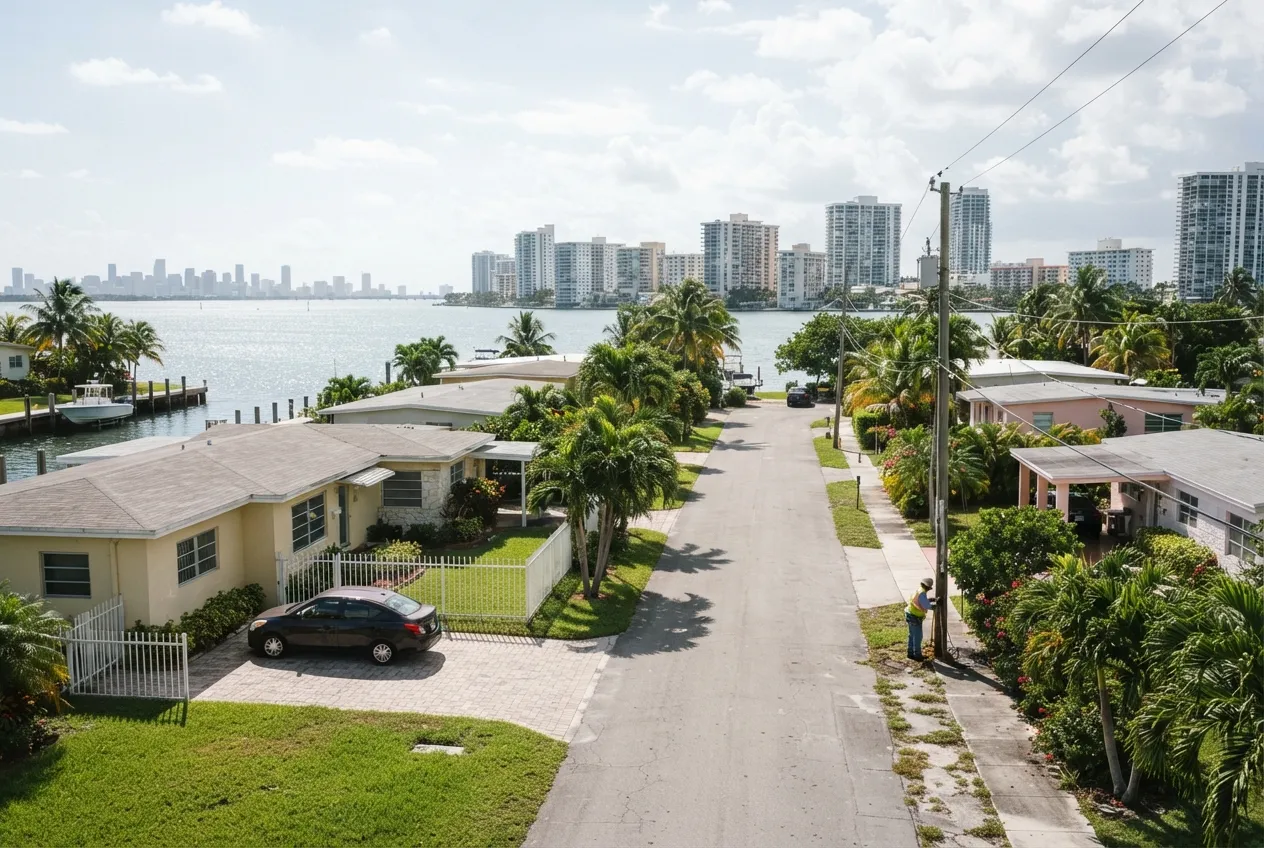
When your air conditioner stops cooling in North Bay Village, the house heats up and the humidity climbs quickly. FirstChoice HVAC Repair is based in Miami Beach, about 2 miles southeast, so our technicians can reach North Bay Village homes, townhouses and condos without a long drive across Miami-Dade County. We find the cause of the problem, explain it in plain language, and make the repair so your system can keep up with South Florida weather. This page covers the AC problems we see most often, what to expect when we come out, and how to decide whether to repair or replace an aging system.
Why Air Conditioners in North Bay Village Work So Hard
Miami Beach and the surrounding area have a tropical monsoon climate. From May through October, the wet season brings heavy humidity and frequent afternoon thunderstorms. November through April is sunnier and less humid, but it is still warm enough that most households run the AC for most of the year. In many other parts of the country, a system gets a break each winter. Here, it rarely does.
Living near the water adds more wear. Salt in the air can corrode outdoor coils, fan parts and electrical connections over time. Constant humidity also means your system pulls a large amount of water out of the air, which puts steady demand on the drain line and pan. Small issues that might go unnoticed in a drier climate tend to turn into breakdowns here.
AC Problems We Repair Most Often
Most service calls in North Bay Village come down to a handful of causes. Knowing the symptoms can help you describe the problem when you call and can sometimes prevent water damage while you wait.
- Warm air from the vents, often caused by a failed capacitor, a bad contactor or a low refrigerant charge
- Water leaking near the indoor unit from a clogged condensate drain line or a rusted drain pan
- Ice on the refrigerant lines or indoor coil, usually tied to restricted airflow or low refrigerant
- An outdoor unit that hums but won't start, or a fan that doesn't spin
- A system that runs constantly but never reaches the thermostat setting
- Musty smells or a sticky, humid feel indoors even while the AC is running
- Corroded coils or electrical connections on outdoor equipment exposed to salt air
- Thermostat or wiring faults that keep the system from cycling properly
What to Expect During a Repair Visit
Our technician starts by asking what you've noticed: when the problem started, any sounds or smells, and whether you've seen water or ice. Then we check the system from the thermostat to the outdoor unit, including electrical components, refrigerant pressures, airflow, the drain line and the condition of the coils.
Before any work begins, we tell you what we found and what we recommend. If there is more than one reasonable option, we explain the tradeoffs so you can decide. Many common repairs, such as replacing a capacitor or clearing a drain line, can often be done during the same visit. When a part has to be ordered, we tell you what to expect in the meantime and whether the system is safe to run.
AC Repair in Condos and Townhouses
If you live in a condo or apartment building, your AC equipment may be in a closet, on a balcony, or on the roof, and some buildings have rules about access, work hours or equipment changes. It helps to check with your building management before the visit so our technician can reach the equipment without delays. In stacked units, a clogged drain line can leak into the home below, so if you see water near your air handler, shut the system off and call us promptly.
Repair or Replace?
Many breakdowns are worth repairing, especially on a system that has been reasonably reliable. Replacement starts to make sense when the same problems keep coming back, when the coils are badly corroded, or when a major component like the compressor fails on an older unit. We give you an honest read on the condition of your equipment so you can weigh the options.
If you do replace, Florida Power & Light runs a Residential HVAC program that offers rebates on qualifying high-efficiency central air conditioners and heat pumps through participating contractors at the time of installation. We confirm the current terms before we include them in a quote. The federal Energy Efficient Home Improvement Credit no longer applies to heat pumps installed after December 31, 2025, so don't plan a new installation around it.
After Storms and Power Outages
Atlantic hurricane season runs from June 1 to November 30, and summer thunderstorms are common even outside of named storms. Power surges and outages can damage capacitors, control boards and compressors. After a storm, look for debris around the outdoor unit and check for standing water before turning the system back on. If the AC won't start, trips the breaker, or makes unusual noises once power returns, turn it off and have it checked. Running a damaged system can turn a small repair into a larger one.
More services in North Bay Village
- Heating Repair in North Bay Village
- Heat Pump Installation in North Bay Village
- AC Installation in North Bay Village
- Furnace Repair in North Bay Village